
Presentation
Raymond Depardon
France • Born: 1942
A World in Colour
In our memories and our mind’s eye, Raymond Depardon is above all a black-and-white photographer. He began his career at Paris press agency Dalmas, then moved to the newly founded Gamma agency, before joining the legendary Magnum collective. A major figure in photojournalism, and one of its most prolific practitioners, Depardon used black and white in his work as a photojournalist, covering political affairs, armed conflicts, major sporting events, and local news stories.
Much like Cartier-Bresson or Robert Capa, Depardon is closely associated with black-and-white imagery, and its connotations of precision and truth. “Great photography was always solemn and black and white,” he remarked recently.
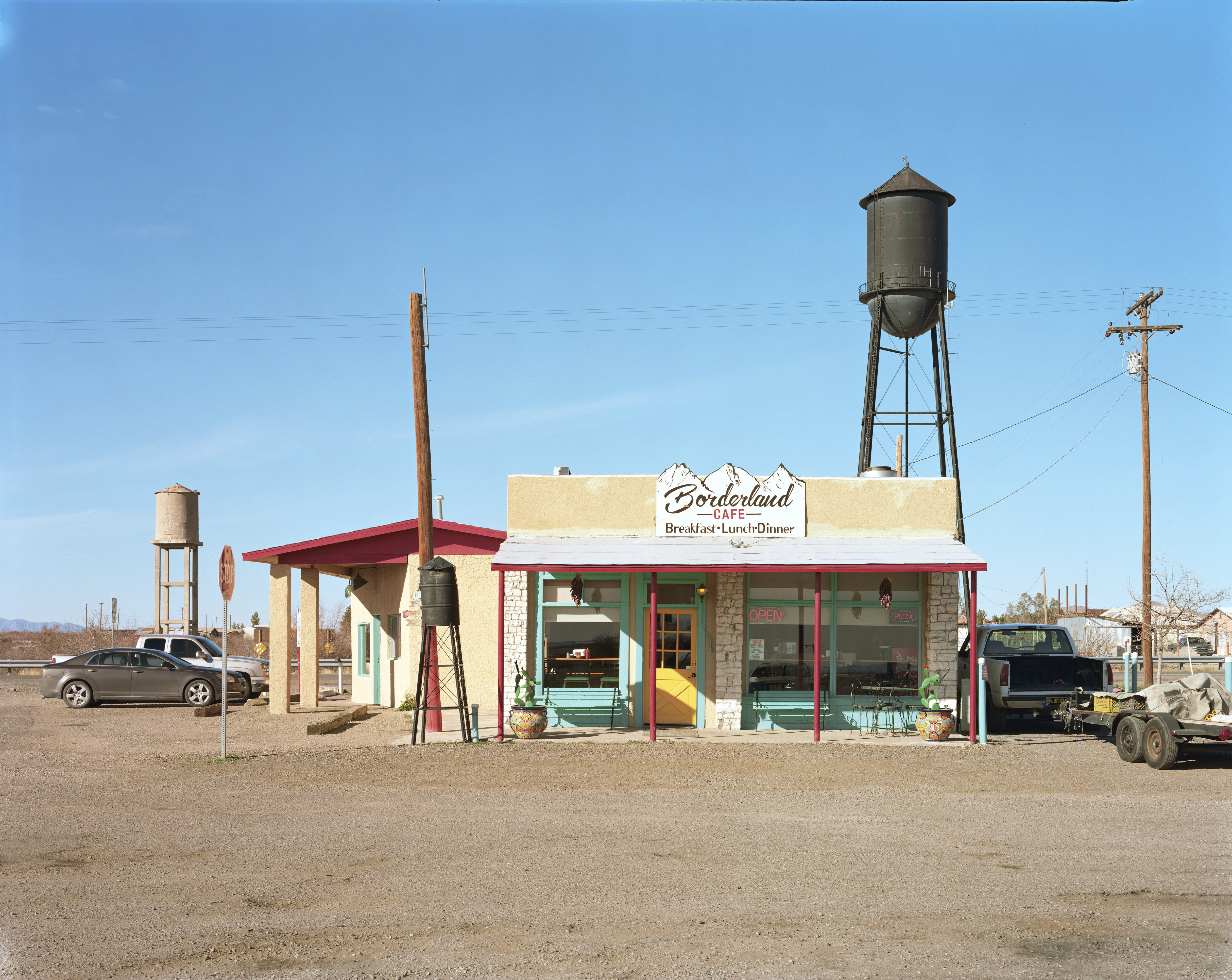
And yet, wherever his assignments and travels took him, Depardon has always worked in colour. From the 1960s - 1980s, he actually used two cameras: one was loaded with black-and-white film for photojournalism, and the other with colour, in the hope of securing a magazine cover. Over time, his colour work took on a different role. It became a place where he could work more freely, explore his own interests, and develop another way of looking at the world.
As the constraints of photojournalism started to fall away, Depardon’s manner of observation also changed. His photographs became more subdued, focusing on ordinary places, everyday situations, and on light and colour themselves. The way he framed images was no longer just a technical practice, it became a deliberate choice. His photographs now showed not only what was in front of the lens, but also the photographer’s presence and own point of view. As his work moved away from straightforward assignments, it became more experimental and exploratory, led by curiosity and by whatever happened to cross his path.
The works shown here were selected by Depardon’s son Simon, from hundreds of photographs that had long been kept in drawers. They clearly show the shift from images taken purely to inform, to images taken to observe.
In these photographs, colour is not just a decorative extra or a persuasive device. It marks Depardon’s starting point for a more intimate way of working. With an approach that is no longer tied to the idea of a single “decisive moment”, he feels freer to allow more room for time, light, and solitude to appear in the frame. These images are not trying to prove anything, they simply wish to observe the world, and spend time with it.
Depardon has described these photographs as “sour sweets and pastel chewing gum: Memories of a happy childhood with all the naivety and innocence of a practice only partly mastered”.
He may have recorded world events in black and white, but it is in colour that Depardon he shows his love for those close to him and his tenderness towards others.
La Prairie.
© Raymond Depardon
