Preserving Our Emotions In Time
By Cyril Drouhet, Commissaire des expositions du Festival Photo La Gacilly
Almost exactly 200 years to this day
on a summer morning, under a cloudless sky, the first rays of sun fell across the roofs of the small village of Saint-Loup-de-Varennes in Burgundy, a few kilometres from Chalon-sur-Saône. On the top floor of his country manor at Le Gras, a slightly stooping man opened his window and pointed the lens of a makeshift camera, assembled from odds and ends, towards the landscape that stretched out before him. This time, he knew luck was on his side, even if the device would have to remain completely still for at least eight hours.
The 61-year-old Nicéphore Niépce waited patiently, confident in the result, based on his many years of research. Niépce’s air of dignity made him seem more like a country gentleman than a maverick inventor. Nevertheless, he had lived through the pivotal days of the French Revolution and Empire, nourished by ideas of progress and the technological ambitions of a new industrial age. Through his veins ran a thirst for science and an insatiable appetite for inventions that would transform societies of the future. He and his brother Claude had previously found a way to extract sugar from beet and Niépce had also cultivated a new fibre that could replace cotton. What’s more, in 1807, he had invented the Pyréolophore, a pioneering internal-combustion engine, designed to propel a boat by drawing in and expelling water.
This scholar was already familiar with the principle of the camera obscura, discovered in Antiquity, where you pierce a tiny hole in the side of a darkened box and the outside scene is projected upside down onto the side opposite the hole. Our modern-day cameras still operate using this very same principle. Niépce took this idea further, inspired to use light to create an image and fix it permanently to a surface. Ten years of experiments and trial and error followed his initial idea, with failure only strengthening his determination. It was on that historic day, 200 years ago, that he had a stroke of genius. Inside his device, he placed a pewter plate coated with Bitumen of Judea, a type of natural tar. That afternoon, he carefully removed the plate, immersing it in a bath of diluted lavender oil to dissolve the areas that had not been exposed to the light. He watched, delighted, as the image slowly appeared. The result was hard to see clearly, but it was still possible to discern a dovecote on the left, a tree extending out from the roofline, a courtyard and, in the distance, a very pale sky. This was in 1826, and a new age had just begun; one that would upend lifestyles that had, until that point, been shaped by a civilisation of the written word. On that day, in the French countryside, Nicéphore Niépce had just invented photography.
France, the Birthplace of Photography
For the 23rd edition of the La Gacilly Photo Festival, it felt only natural to mark the anniversary of an invention that has so deeply influenced how we experience the world. In many ways, photography is very much a French story; one which was refined and commercialised by Louis Daguerre, brought to a wider audience by Gustave Le Gray, and carried forward by great photographers such as Eugène Atget, Brassaï, Henri Cartier-Bresson, Sabine Weiss, Marc Riboud, and Françoise Huguier. Some of the great photojournalism agencies (including Magnum, Gamma, Sipa and Rapho) were founded in Paris. Furthermore, it is here in France, with its wealth of art galleries, that exhibitions by leading photographers draw large crowds, and publishers nurture new talent and showcase outstanding photography from around the world. In recent years, our Festival has celebrated British photographers and artists from Japan and Italy, and the continents of Africa and South America. This year we will pay tribute to Nicéphore Niépce’s successors, from France and beyond, who keep the values and emotional power of this everevolving art form alive.
Nevertheless, it took time for photography to be recognised as an art form, and earn its place of honour, in France. In photography’s early days, painters like Delacroix and Degas dismissed it as a “mechanical, soulless medium, incapable of producing work to rival the finest art, which is born of intelligence and true artistic knowledge”. The poet Charles Baudelaire even launched a fierce tirade against the photography studios that were springing up on Parisian boulevards, writing how “degenerate society has hurled itself at photographs like Narcissus, intent only on gazing upon its own trivial image preserved on metal plates”. He would have undoubtedly loathed selfies.
We now live in an age when images overwhelm our daily lives, and new technologies and Artificial Intelligence only add to this excess. Anyone with a smartphone can turn themselves into a photographer, videographer or reporter. An estimated 2.1 trillion photographs were taken worldwide in 2025. Around 14 billion images are shared every day on social media: 6.9 billion via WhatsApp, 3.8 billion via Snapchat and 1.3 billion on Instagram. Yet there is a sizable difference between the quick snaps we all take on impulse and the work you can see each year in the lanes, gardens and mounted on the walls of our village. These images are the result of genuine creative work and careful thought. They are shaped by a photographer’s eye, whether artistic or journalistic, and by a deeply engaged way of seeing the world. That is what sets them apart, and great artists are best placed to talk about this difference. Surrealist painter Joan Miró was known to explain how a powerful image is never forgotten, saying “You can look at a picture for a week, then never think about it again. You can also look at a picture for a second and think about it for the rest of your life”. The great Richard Avedon would expand on this, reminding us that every image is shaped by the photographer’s unique point of view, and is therefore deliberately subjective, saying “All photographs are accurate but none of them is the truth.” Perhaps no one put it better than Karl Lagerfeld, who declared “What I like about photographs is that they capture a moment that’s gone forever and is impossible to reproduce.” A photograph is a bridge between yesterday and today; when it withstands time, it becomes a work of art.
Trying to sum up 200 years of French photography at La Gacilly in just twenty exhibitions would be bold, not to say presumptuous. Instead, the work of twenty artists displayed here, invites you to explore, or to rediscover with fresh eyes, the festival’s longstanding commitment to thoughtful, humancentred photography. Through work that is both sensitive and compassionate, we are encouraged to pause and think. These images make us marvel at the world as it is today. They also remind us how deeply we long for it to become a more harmonious place in these troubled times. Above all, we are encouraged to awaken our senses, our capacity for wonder, empathy, and consideration.
The Art of Portraiture
It is thought that almost 100 million selfies are taken every day: a staggering number, and a sign of a culture of self-image that has gone into overdrive. For professional photographers, portraiture is about far more than a quick snap. Three exhibitions chart the history of photographic portraiture, each highlighting a different era and one of its great masters. The story of portrait photography begins with the Nadar family. Until the second half of the 19th century, the most influential people would usually turn to a painter if they wanted to leave behind a lasting image of themselves. Félix, Adrien and Paul Tournachon (the Nadars), turned that custom on its head. In their Paris studio, the upper middle classes and the leading figures from the arts and literature would come to “get their portrait taken”, in a fairly traditional style, at least at first. Moving forward, a new level of realism would appear on the faces of Victor Hugo, Auguste Rodin, Sarah Bernhardt and Alexandre Dumas. The power of their gaze, the elegance of their poses and the intensity of their personalities still grip us to this day. Painted portraiture gradually gave ground to photography: from then on, any painted portrait would have to measure up to what the camera could reveal.
A century later, the gentle yet curious eye of Jean-Marie Périer turned to the new pop stars of the 1960s. Young women and men of his own generation were suddenly in the spotlight, including Johnny Hallyday and Sylvie Vartan, Françoise Hardy, Jacques Dutronc, The Beatles and The Rolling Stones. His pictures feel caught in the moment and often appear to capture small moments of everyday life. Périer photographs to entertain, but also to show the lighthearted seriousness of young icons trying to find their way in the world. These images feel like fragments of an autobiography or a diary left open for us to read.
Pierre et Gilles take us into a world where photography and painting are completely intertwined. The two artists met fifty years ago, and their joint signature has come to stand for a single, inseparable artistic identity. Their unique and instantly recognisable images place friends and relatives (known and unknown) in theatrical, carefully staged settings that blend elements of mythology and pop culture. Look a little closer at their work and you will see Madonna, Naomi Campbell, Stromae and Isabelle Huppert as you never have before.
The World’s Memories
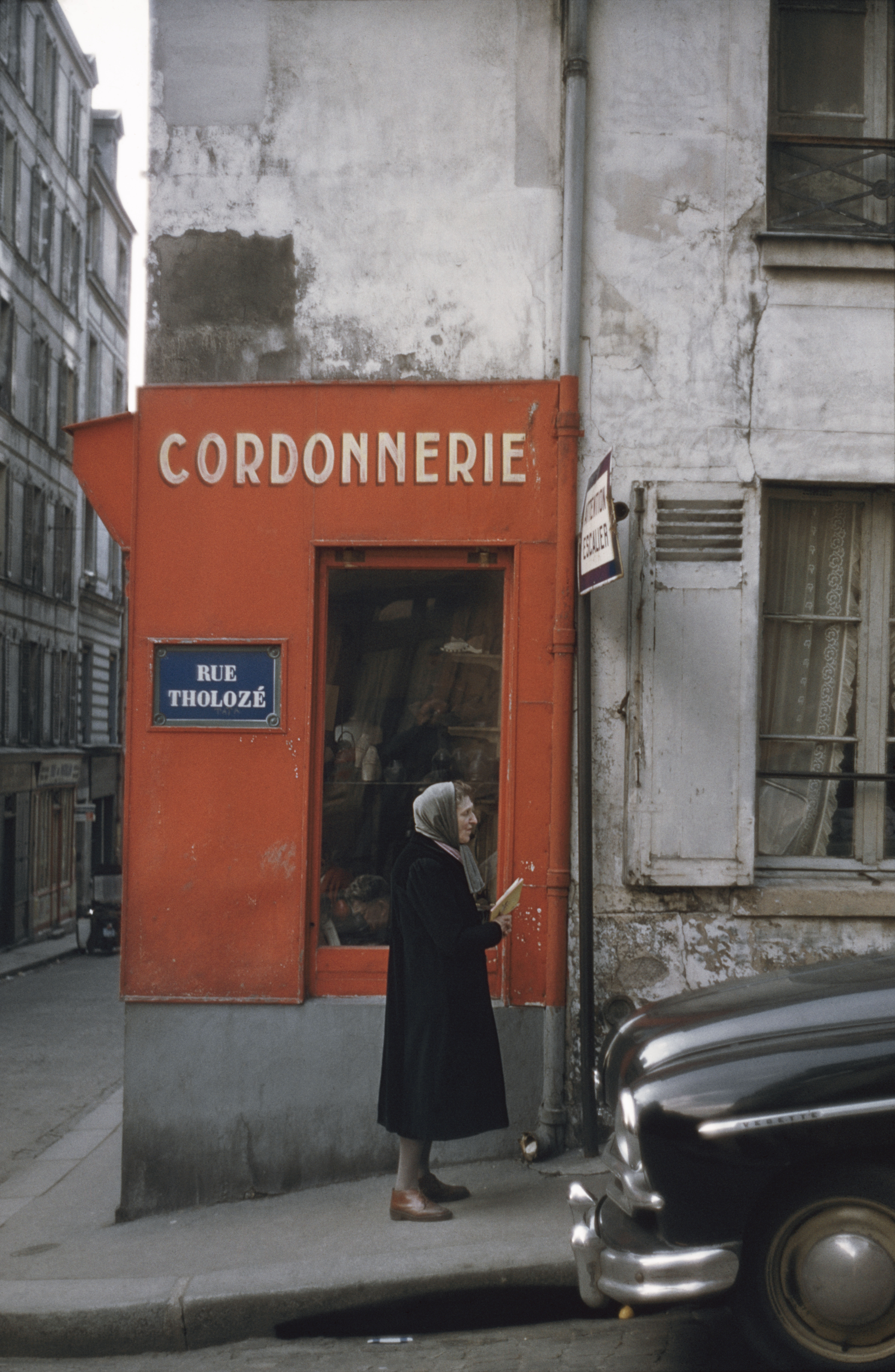
Photographers capture the world’s memories with their cameras, and some images remain with us so vividly that they enter our shared history. These become precious visual testimonies that help us understand how society has changed over time. Willy Ronis will forever stand among the great masters of photography thanks to his ability to capture the spirit of an era in its most truthful form. Among his bestknown photographs are The Lovers at the Bastille, The boy running with a baguette, and The woman pushing a pram. Far fewer people know of the delightful treasures he created decades later, on Kodachrome in the streets of Paris. These colour images have striking immediacy and reveal a new side to the prolific humanist that was Willy Ronis. Another towering figure is Sebastião Salgado, a tireless friend of the Festival, who left us far too soon on 23rd May 2025. His immense humanity gave La Gacilly some of its finest moments; four of his exhibitions here were particularly popular with the public. This year, his wife Lélia pays tribute to him through an extensive retrospective exhibition, where she adds her own commentary to some of his photographs. Through this retrospective, we rediscover Salgado’s belief in humanity and his deep sense of solidarity. These qualities run through his images of exodus and exile, his great mural on human labour, and his visions of an Amazonian Eden, all charged with extraordinary creative energy. Raymond Depardon is a major figure within contemporary photography. Standing somewhere between reporter and artist, press photographer and museum favourite, few photographers can match the scale of his visual output. He built his reputation through his blackandwhite images depicting Lebanon, the African continent and rural France, created over the years spent working first with French press-photo agency Dalmas and later the internationally renowned photographers’ cooperative Magnum. He is now broadening his approach by opening his colour archives and revealing what he calls his ‘sour sweets’: a joyful, personal and invigorating body of work drawn from sixty years spent reporting. FrancoAmerican photographer Jane Evelyn Atwood is widely acclaimed and has lived in France since the 1970s. Through her awardwinning work, Atwood demonstrates her deep connection to France. She constructs a highly personal view of the country with a mix of delicacy and unsparing honesty. Her images focus on people at the margins, the overlooked and forgotten in our society. Some might imagine Atwood’s work to solely focus on human subjects. However, her recent project on horses, seen on display here, expresses the same values and becomes, in its own way, a powerful celebration of freedom. The Festival also delights in spotlighting lesserknown voices, and this year we are showcasing the work of Pierre Le Gall. His mischievous, ironic, and gently humorous eye deserves to be far better known. His photographs depict vivid fragments of everyday life, full of wit and playfulness, renewing our joy of simply being alive.
Celebrating the Living World
Our Festival has never turned its back on environmental issues; quite the contrary, in fact. Since the Festival began, the living world has always been at the heart of our exhibition programme. We are regularly reminded how those in power are failing to tackle climate change. Meanwhile, the world is sliding deeper into economic crises and conflicts that further destabilise an already fragile balance. Extreme weather and natural disasters are also on the rise. The wars that leave cities ruined, communities shattered, land devastated, rivers polluted, and fields barren cannot be ignored. Taken together, these realities only strengthen our desire to celebrate and protect the natural world on which our lives ultimately depend. All the artists you will discover at La Gacilly this summer refuse to give up on this fight.
Vincent Munier is widely regarded as the leading voice of positive ecology. He returns to our Breton village with his latest work, Le Chant des Forêts (Whispers in the Woods). His documentary of the same name was released last winter and captivated cinema audiences. This ode to the Vosges forests of his childhood in northeastern France - and to the wildlife hidden within them - serves as an invitation to switch off the noise of the modern world and reconnect with nature. Sophie Hatier takes us on a poetic journey through calm, almost otherworldly, spaces at daybreak. She photographs quiet, nearabstract scenes of sky, cliffs, and geysers and brings a gentle, attentive eye to these landscapes. Through Claudine Doury’s images, we encounter the peoples of the far North, who celebrate the summer solstice as a time when life returns. Their festivals bring communities together around shared fires, bodies of water, and the surrounding landscape. Éric Garault focuses on those he calls the Guardians of the Living World. In Togo, France, the Netherlands, and Ecuador, he photographs people who plant trees to restore the land, reshape natural boundaries and push back against human pressure on the planet. In the Bugey region of eastern France, photojournalist Serge Sibert turns his attention to the everyday lives of farming families. His images show how they maintain small-scale, people-centred farming, while modernizing their methods and passing on tools and skills that will be crucial in the years ahead. Julie Bourges has explored our own département of Morbihan, a place steeped in myths and legends. She creates an imaginary world that is entirely her own. Her images lead us through the legendary Arthurian forest of Brocéliande in Brittany and among the islands of the Gulf of Morbihan. Bourges uses these landscapes as backdrop to tell her stories. For Lys Arango, the key message is that nothing is inevitable. She documents the impact of monoculture in Guatemala, and the chronic malnutrition that comes with it. Alongside this, her work focuses on the wisdom of elders. Their knowledge, rooted in a culture that has long been pushed aside, suggests another way forward; one which could allow the fields to flourish again. Ingmar Björn Nolting turns his camera on the paradoxes of modern life. Climate change is a major concern, yet our everyday habits and systems still undermine the basic principles of environmental protection. His images hold up a mirror to that contradiction and invite us to question the way we live.
Photography in All Its Forms
Photography still captures single moments in time, but Nicéphore Niépce would scarcely recognise the world we live in today. We have moved from pencil to laptop, from analogue film to digital images. We can now even use powerful technologies to step away from or distort reality. Many photographers are now questioning the limits of the medium, and La Gacilly has become a place where their explorations and experiments can be put on display. Lee Shulman, founder of the Anonymous Project, has assembled one of the largest private collections of amateur photographs, in the form of over 800,000 Kodachrome slides. These images tell the story of everyday lives, where vivid memories sit alongside moments that might otherwise be forgotten, and offer a new way of thinking about how we all fit into the contemporary world. Jérôme Gence sees no need to lecture us about the excesses of social media. His uncompromising images demonstrate how, little by little, we drift away from one another. His work shows how our loneliness can trap us in virtual worlds, even to the point of “marrying” fictional characters. The artist duo Simon Brodbeck and Lucie de Barbuat depart from traditional photography by creating images from a world that does not exist. They use Artificial Intelligence to rewrite history and construct surreal visual narratives. These works sit at a crossroads between documentary and fiction, and the artists describe them as “hallucinations”.
Two hundred years after its invention, photography has become much more than a visual art, as the works exhibited at the Festival demonstrate. Photography is a way of seeing the world, of feeling, and of telling stories. With it, we hold on to moments that would otherwise be lost, build bridges between the past and present, and think more clearly about the future we all share.