
Presentation
Nadar
France • 1820 - 1910
The Art of Portraiture
The Tournachon family adopted the pseudonym Nadar, a name that has since become legendary in the history of French photography. These three men, these pioneers, shaped photography in its early days and helped to establish it as a fully-fledged art form in the second half of the 19th century.
Félix Nadar (1820 -1910) took on a starring role within his family. An outspoken journalist, writer, and caricaturist, Félix Nadar was celebrated for the remarkable series of portraits he produced of his contemporaries in the 1850s and 1860s. He played with drapery and with the outline of his subjects, stripping away intrusive costumes and heavy, painted backdrops. He captured the sparkling gaze of Alexandre Dumas (the elder), the melancholy of his friend Charles Baudelaire, and the romantic majesty of Franz Liszt. He also photographed Victor Hugo one last time, on his deathbed. In that final image, Hugo’s face is lit only by daylight and is widely regarded as a masterpiece.
Félix Nadar’s visionary talent may have overshadowed two other members of the family, who also shaped its artistic legacy. His brother Adrien Tournachon (1825 - 1903) was a bohemian artist and accomplished photographer, and his son Paul Nadar (1856 -1939), a forward-thinking entrepreneur, who helped popularise Kodak in France. Adrien Tournachon’s portraits explored the play of expression in his sitters’ faces, from the haunted gaze of Gérard de Nerval to the melancholy of Gustave Doré. Meanwhile, Paul Nadar was born in his father’s studio and immersed himself in photography from an early age, where it went on to become his life’s purpose.
Paul Nadar would go on to run the Nadar studio, first in Paris and later in Marseille, until his death. He turned it into an institution that attracted the great figures of the age, from Sarah Bernhardt to leading aristocratic families. Paul Nadar’s daughter Marthe later inherited the studio’s archive and, in 1950, donated it to the French state. Comprising approximately 250,000 negatives, this collection became part of the French national photographic archives. In 1992, the collection was officially listed as part of France’s protected historic heritage. When the French National Heritage and Photography Library was created in 1996, it was incorporated into the new institution.
With support from the French National Heritage and Photography Library. Special thanks to Fatima De Castro, Matthieu Rivallin, Gilles Désiré dit Gosset, and the teams at the MPP.
Labyrinthe.
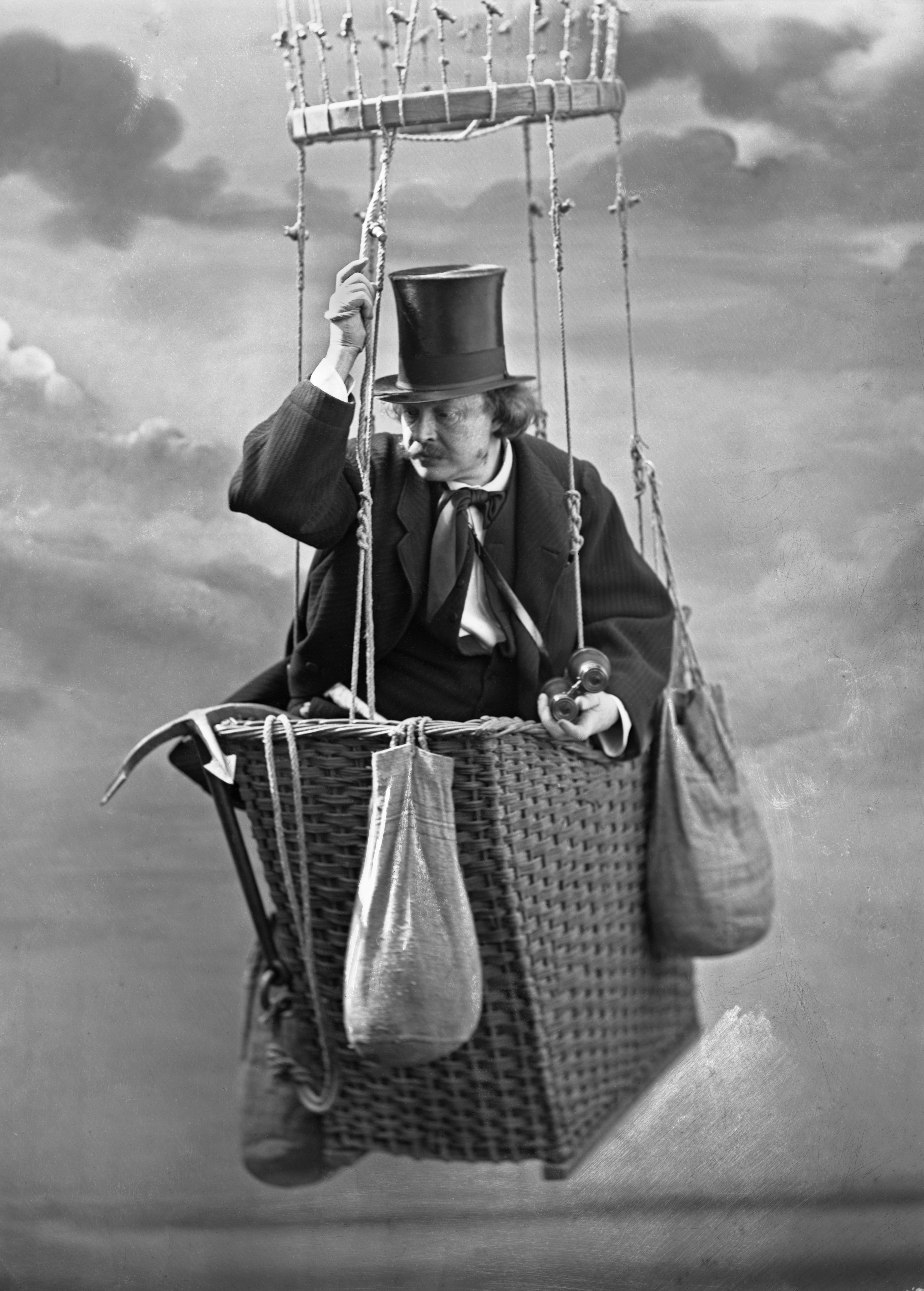
© Nadar
